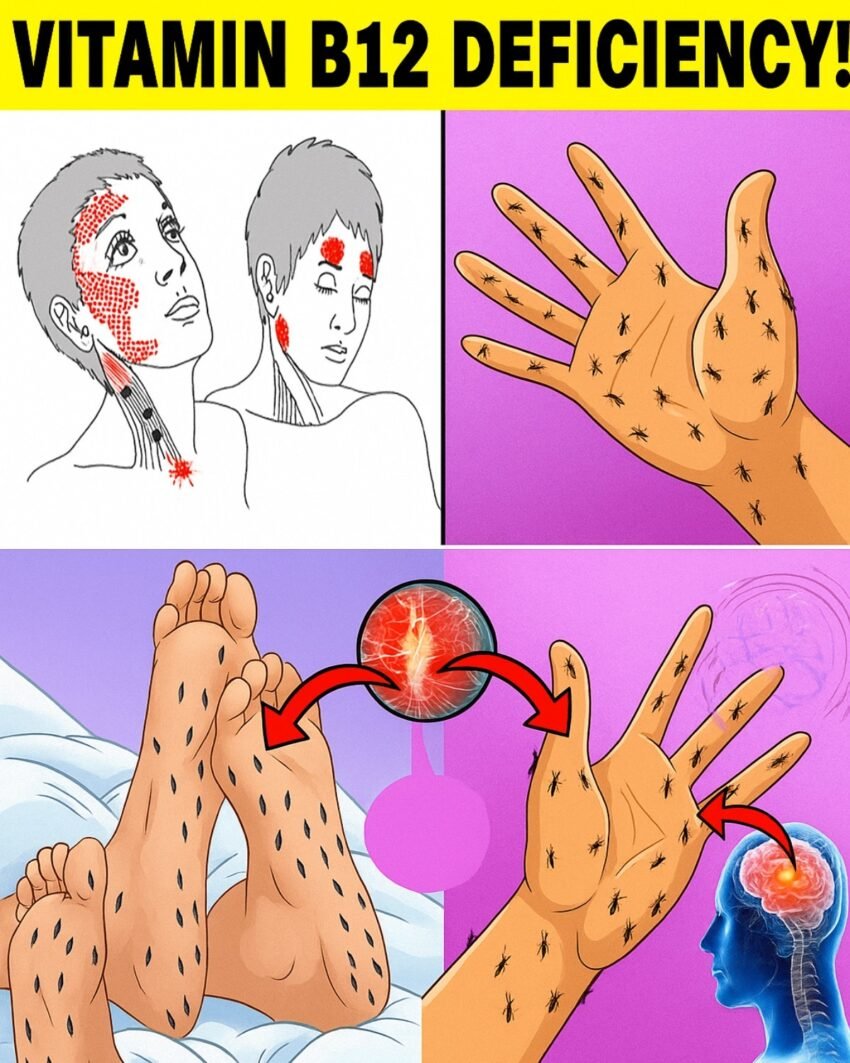
Vitamin B12 is essential for nerve function, red blood cell production, and DNA synthesis. A deficiency can develop slowly and often goes unnoticed—but untreated, it can cause serious health problems.
🧪 Key Vitamin B12 Deficiency Symptoms
1️⃣ Fatigue & Weakness
- Feeling tired even after rest
- Often the first sign, due to reduced red blood cell production
2️⃣ Numbness or Tingling
- Pins-and-needles sensation in hands, feet, or legs
- Caused by nerve damage from low B12
3️⃣ Cognitive Changes
- Memory loss, difficulty concentrating, or confusion
- Severe, prolonged deficiency can mimic dementia symptoms
4️⃣ Pale or Jaundiced Skin
- Pale skin indicates anemia
- Yellowish tint can appear if red blood cells break down prematurely
5️⃣ Glossitis & Mouth Ulcers
- Inflamed, red tongue
- Painful sores in the mouth
- Burning or tingling sensation
6️⃣ Mood Changes
- Depression, irritability, or anxiety
- Linked to neurotransmitter imbalances caused by deficiency
7️⃣ Vision Problems
- Blurred or disturbed vision
- Damage to the optic nerve (rare but serious)
⚠️ Who’s at Higher Risk?
- Older adults (absorption decreases with age)
- People with pernicious anemia or gastrointestinal disorders (Crohn’s, celiac)
- Vegans or strict vegetarians (B12 is mostly in animal products)
- People on certain medications (e.g., metformin, proton pump inhibitors)
✅ What to Do
- Blood test to check B12 levels
- Supplementation:
- Oral B12 tablets or sublingual drops
- Injectable B12 in severe cases
- Dietary sources:
- Meat, poultry, fish, eggs, dairy
- Fortified plant-based milks or cereals
⚖️ Bottom Line
Vitamin B12 deficiency can affect nerves, blood, mood, and vision. Early detection and supplementation are key to preventing permanent damage.
If you want, I can create a visual checklist of subtle B12 deficiency signs so you can spot them early before serious symptoms appear.
